One of the demos Google DeepMind published on 27 October 2026 is a man playing saxophone on a platform floating in a misty lake. The prompt behind it runs to about 270 words, and part of it lists what the image must not do: “Absolutely no HDR, no dramatic contrast, no glossy digital rendering.”
For people who design brands, games or immersive websites, Genie 4 turns a walkable first draft of an idea into a matter of minutes; deciding what that world should say is still the work. Genie 4 is a world model: an AI system that generates an environment frame by frame as you move through it, instead of rendering a finished video. It now adds sound, lets you change the scene with text while you are inside it, and for now only invited testers can use it.
What does Genie 4 actually do?
In DeepMind’s announcement, a Genie 4 world is explored with standard keyboard controls, and text instructions change it as it runs: different weather, a new camera angle, another person or object. Gemini, Google’s language model, sits in the loop. It adapts each instruction to the surrounding scene and, between your inputs, “monitors and steers the scene to keep the world progressing cohesively”.
The new part compared with Genie 3, which Google released as a research preview a little over a year earlier, is sound. DeepMind calls Genie 4 its “first real-time world model to generate audio natively”: ambient sound, music and dialogue generated together with the image. TechCrunch reports that Genie 4 keeps a scene consistent for up to two minutes, double its predecessor. That figure comes from Google’s press briefing; the DeepMind post itself only speaks of “short sessions”.
Who can use Genie 4, and when?
Nobody outside a test group, for now. DeepMind says it has started rolling Genie 4 out “as a research preview for trusted testers”, and that it is “coming soon” to Google AI Ultra subscribers in Project Genie and to early access partners in the Gemini API and Google AI Studio. There is a waitlist and no date. The New Stack notes there is also no word yet on pricing or performance guarantees.
That changes how the demos should be read, because every clip on the announcement page was chosen by Google. The Hacker News thread about the launch had passed 1,000 points and 570 comments by 28 October, and some of the top comments point at where the clips break: a section of castle that is gone when the camera turns back during a dragon flight, a marble bust that hits a watermelon and stays upright when it should topple. Those are viewers’ observations, not measurements, but they match what DeepMind itself lists as unsolved.
What Genie 4 still gets wrong
The announcement is unusually direct about its limits. In DeepMind’s words, “visual details and object permanence can still shift or drift over time”, especially in longer sessions, after several prompt edits or when moving around the scene. Complex physical interactions, accurate real-time audio, spatial accuracy, long-term consistency and legible text are all listed as open research. In a generated world, legible text means signs, labels and screens: anything a visitor is supposed to read.
The New Stack adds a point for anyone hoping to use Genie 4 for testing: Google “hasn’t published benchmarks showing how Genie 4 performs across repeated agent tests”, including whether the same prompt produces consistent results. For a creative draft, variation is harmless. For anything that has to behave the same way twice, Genie 4 is not a tool yet.
What changes for people who build experiences
DeepMind’s testers point to the most realistic use. Game developers and creative technologists are testing Genie 4 “to go from an initial idea to an explorable prototype in seconds”, trying visual styles and mechanics “before writing a single line of engine code”. Creative teams are also testing it as a “draft mode” for pre-visualisation, where filmmakers can run several takes and change camera, lighting and dialogue on the fly. Diego Rivas, a DeepMind engineer, told TechCrunch the real-time aspect is most valuable “in the ideation phase, in the storyboarding phase”.
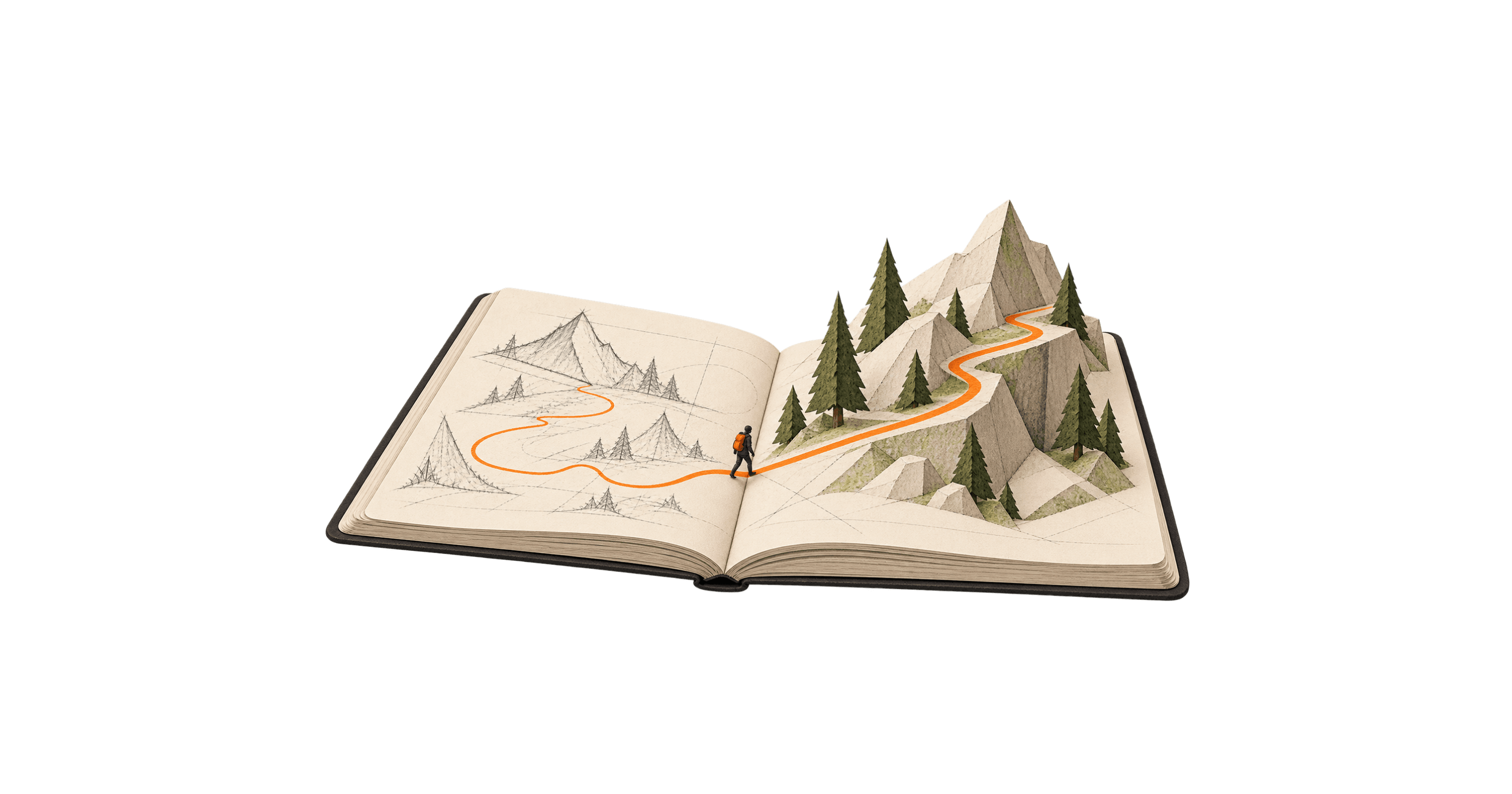
Our read is that this is where Genie 4 lands for anyone outside AI research: a sketch you can walk through. A brand experience, a launch site or an installation could be shown as a space with sound before anything is built. That shortens the most expensive conversation in a creative project, the one where everyone in the room is imagining something different.
It does not shorten the rest, and Google’s own demos show why. The saxophone prompt is a creative brief: film stock, grain, contrast, where the camera may go, which sounds are allowed. The prompt for a maple seed falling into grass is 15 words long. A seed has nothing to say. The more a world needs to communicate, the more its prompt reads like art direction, and the generated world still struggles to render readable text or stay stable beyond a short session. Story, on-screen text and what happens after the first minutes are the parts a brand most needs to control, and they are the parts Genie 4 leaves open. A website that tells you something while it loads, like the one we looked at in October, works because someone designed that sequence on purpose.
What to watch
Three things will decide whether Genie 4 matters outside demos: the price and usage limits when it reaches Ultra subscribers, whether text and object permanence improve, and whether anything can leave Google’s runtime. One commenter in the launch thread asked whether Genie 4 can export 3D assets or a game-engine project; the announcement does not say. If the answer stays no, Genie 4 is an excellent sketchbook that only opens inside Google. If it becomes yes, the line between prototype and production starts to move.
Sources
- Genie 4: A new generation of world simulation, Google DeepMind, 27 October 2026.
- Google’s Genie 4 world model adds audio, more realistic worlds, and real-time steering, TechCrunch, 27 October 2026.
- Google built AI agents a world to practice in. The physics still aren’t quite right., The New Stack, 27 October 2026.
- Genie 4 discussion, Hacker News, 27 October 2026.